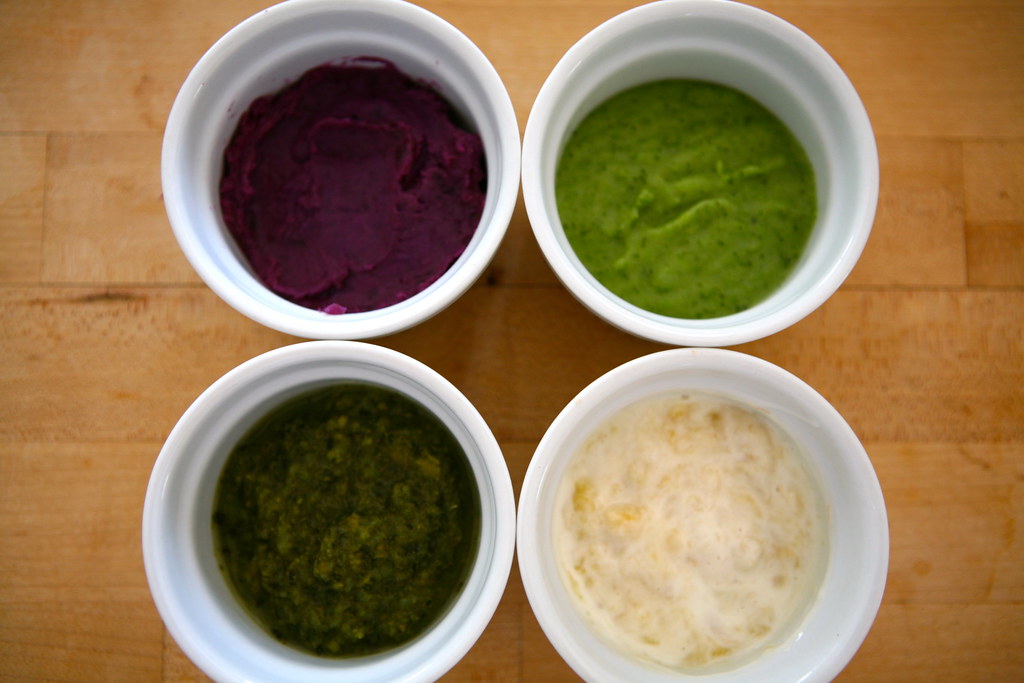
Baby Food Stages: How Textures Change as Your Baby Grows
Baby food stages describe how food texture can progress as your baby builds eating skills. Use your baby’s abilities—not a jar label or age alone—to guide each change.
Read postExplore baby-feeding guidance, from feeding approaches to common questions and concerns.
Baby food stages describe how food texture can progress as your baby builds eating skills. Use your baby’s abilities—not a jar label or age alone—to guide each change.
Read postStart with a calm, supervised first taste, then offer new foods in manageable ways as your baby gets comfortable. Use these steps…

Most babies are ready to start solid foods at about 6 months. Consider your baby’s developmental readiness too, and ask their health…
Store homemade baby food in small, covered portions and refrigerate or freeze it promptly. Use practical steps for thawing and serving, and…
There is no single required first food. Compare vegetables, fruits, grains, and protein foods to find a practical, nourishing choice for your…
Simple homemade baby food recipes can make it easier to offer a range of fruits, vegetables, and other foods. Use your baby’s…

Make baby food with a simple routine: wash and prepare the ingredients, cook them until tender, then mash or puree to a…
A consistent routine makes expressed milk easier to identify and use. Prepare a clean container, label the expression date, and choose storage…
Storage bags can save space, while reusable bottles or containers may suit families who want to wash and reuse their storage gear.…
Tommee Tippee’s breast milk pouches hold up to 6 fl oz, and a starter set is designed to connect them to leading…