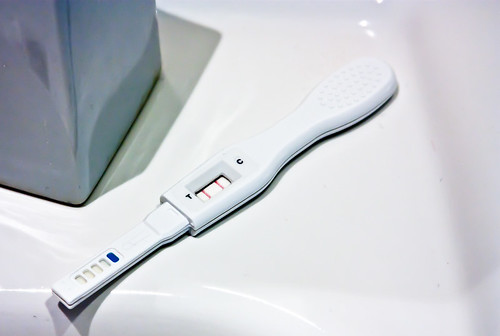
When to take a pregnancy test depends on your cycle: for most home tests, the best time to start is the first day of a missed period. [1][2] If you do not know when your period is due, testing at least 21 days after sex is a practical timing guide. [2]
These timing points can help you choose a date when the result is more useful, especially if your cycle is hard to predict. For example, if your period is expected on Friday, you can start testing that day; if you cannot estimate when it is due, count at least 21 days from the sex you are concerned about. [2]
Some tests may detect pregnancy earlier, but a negative result before your expected period may not settle the question. [1] If you are deciding whether to test ahead of schedule, keep in mind that an early negative is not the same as a clear answer. Choose the timing that fits what you know about your period, and use the test instructions when you take it.
Can you test before your period is due?
Some home pregnancy tests are marketed for use before your period is due, so you may be able to test early—but an early result can be less clear. [3][4]
Early detection is possible, but the timing varies by test. One test maker says its early-result test can detect pregnancy up to six days before the day of a missed period; that timing applies to that specific product, not every home test. [4] Advanced tests may detect pregnancy as early as eight days after ovulation, but that does not mean every test will do so. [3] It also helps to read How to Use a Home Pregnancy Test.
If you test before your expected period, a negative result may not mean you are not pregnant. [3] For example, you might test several days before your period is due and get a negative because it is still too early for that test to detect pregnancy. [3]
Check the package for the test’s stated timing and follow its directions. Tests can differ, so use the instructions for the one you have rather than assuming that an early-testing claim applies to every product.
What should you do after an early negative?
If your period has not started after an early negative, repeat the test after the day your period was expected. [2] A negative result before then may not be your final answer, so choose a reminder date rather than trying to interpret the result as settled.
For example, if you tested a few days before you expected your period and it still has not started when that date passes, take another test then. If your expected date is uncertain, use the 21-days-after-sex timing guide to decide when to test again. [2] You can mark the date on a calendar or set a phone reminder, especially if you are keeping track of several busy days.
Until you retest, avoid treating the early negative as confirmation that you are not pregnant. Give yourself a clear next step: note when your period was expected, or count 21 days from sex if you do not know that date. [2] Then repeat the test at the appropriate time, following the directions for the test you have. This makes it easier to act on a result taken at a useful time rather than relying on an early one.
What if you are unsure when your period is due?
If you cannot estimate when your next period is due, use the date you had sex to help choose when to test. A practical benchmark is to test at least 21 days after sex. [2]
For example, if you remember having sex on a Saturday but your cycle dates are unclear, count forward from that Saturday and plan to test once 21 days have passed. If you had sex on more than one date, count from the most recent date to choose a testing day that fits the benchmark. [2]
Check the instructions on the test package before you use it. The package gives the timing guidance for that specific test, so follow it rather than assuming every test has identical directions.
If you are unsure which date to count from, write down the dates you remember and use the most recent one as a simple planning reference. Then check the package so you know how that test says to use it. If the date is only approximate, treat your planned day as a guide and follow the test’s own instructions.
Choose a date and test again if needed
If your period is due or late, take a pregnancy test now; if you tested earlier and got a negative, choose a follow-up date based on when your period was expected. Most tests can be used from the first day of a missed period, and if you do not know when your next period is due, test at least 21 days after sex. [2] You may also find this useful: What to Do After a Positive Pregnancy Test: Next Steps.
Pick a clear follow-up date
If you tested before your expected period and the result was negative, mark the day your period was due on a calendar. If it still has not started by then, take another test. For example, if you tested a few days before your expected period, plan to test again once that date has passed rather than taking tests day after day.
If you cannot estimate when your period is due, count 21 days from the date of sex and use that as your testing benchmark. [2] Write the date down if it helps you keep track, and follow the timing instructions that come with your test.
Keep the next step simple
A negative result from an early test does not mean you need to guess when to try again: use the expected period date, or the 21-day benchmark if your cycle timing is unclear. [2] If you are unsure how to apply those dates to your situation, check the test instructions for its recommended timing.
The practical next step is to choose the date that fits your situation and put it somewhere easy to remember. If your period is already due or late, test now; if you tested early and it has not come, plan a repeat after the expected date.